Signing Memorandum of Agreement with Assam Down Town University of India
It is our great pleasure to publicize that Joseph Education College signed the Memorandum of Agreement with Assam Down Town University of India on 19 August 2026.
This Memorandum of Understanding (MOU) will serve as a general framework for institutional co-operation. It will facilitate faculty members to discuss and develop specific programs of co-operation. Each University will designate a liaison officer to co-ordinate the application of this MOU in the best interest of both Institutions. Co-operative relations shall be carried out through the activities such as:
- Student Exchange: In the case of the exchange of students, Both Parties will evaluate and decide on the study period of the relevant student. A student, who has received a grant and fulfills the entrance level of each institution, will be treated as a fully accepted student of the concerned School/Faculty/Department, with all the same rights and regulations.
- Faculty Exchange: The exchange of academic staff for a short duration in order to share expertise and knowledge among staff and students of both parties.
- Research Degrees: The provision of placements and support for Master’s Students to undertake a period of research/placement at the partner institution.
- Summer/Spring Program: Both parties will agree to participate in short-term Summer/Spring programs arranged by partner institutions. In this matter, the partner institution will circulate the notices among students and motivate them to attend the summer program for capacity building and cross-cultural education.
- Intern Exchange: To encourage young entrepreneurs, newly graduated, and young teaching assistants, both parties will facilitate them for internship placement from the partner institution.
- Scholarship Opportunity: Both parties may arrange scholarship opportunities for meritorious students of the partner institution and cooperate accordingly.
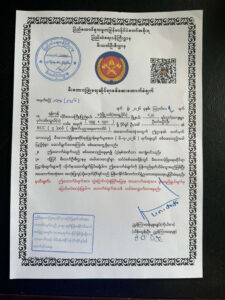
Obtaining the Fire Safety Certificate of Our College
We would like to inform you that we received the Fire Safety Certificate of our college building from Department of Fire under the Union Ministry of Social Welfare on 7 August 2026.